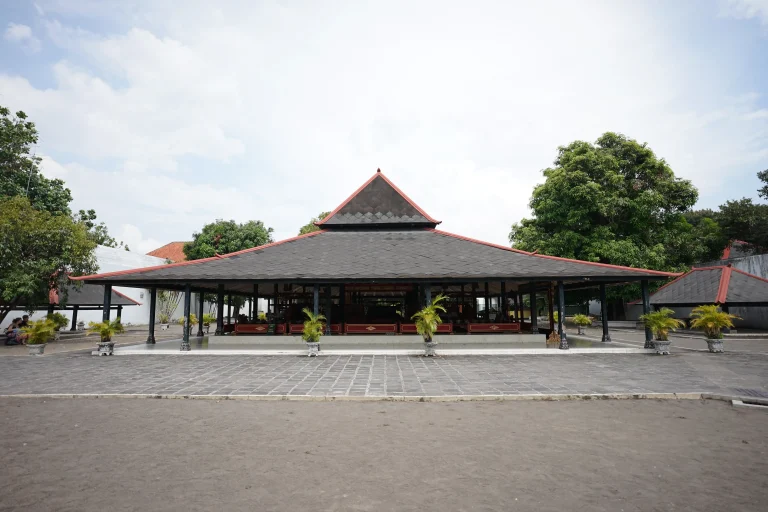
The Living Heart of Javanese Culture


At the center of Yogyakarta, where tradition and modernity coexist in harmony, stands the Kraton Ngayogyakarta Hadiningrat—the Royal Palace of Yogyakarta. More than just a royal residence, the Kraton is the spiritual, cultural, and political heart of the Sultanate, representing centuries of Javanese philosophy, artistry, and leadership. Built in 1755 by Sri Sultan Hamengkubuwono I, following the Giyanti Agreement that divided the Mataram Kingdom, the palace was designed not only as a seat of power but as a reflection of the cosmic order in Javanese belief. Every gate, pavilion, and courtyard follows a precise spiritual and philosophical alignment that symbolizes harmony between humanity, nature, and the divine.
A Masterpiece of Javanese Architecture
The Kraton’s architecture exemplifies the finest expression of Javanese craftsmanship and symbolism. Its layout follows a sacred north-south axis, stretching from Mount Merapi to the Indian Ocean, symbolizing the balance between the spiritual and the earthly realms. Within its vast complex, visitors can admire grand pendopo (open pavilions) with soaring joglo roofs, intricately carved teak doors, and elegant courtyards paved with volcanic sand from Merapi—each element rich with meaning and tradition. The palace is surrounded by fortifications and Alun-Alun Utara (North Square), which historically served as a ceremonial ground for royal events. Every structure within the Kraton embodies deep philosophy. For example, the Bangsal Kencana (Golden Hall), used for royal audiences, represents majesty and enlightenment, while the Bangsal Manis (Sweet Hall) exudes warmth and hospitality, symbolizing the gracious character of the Sultanate.
A Living Museum of History and Art
Today, the Kraton functions as both a living palace and a museum that preserves the cultural heritage of the Yogyakarta Sultanate. Inside, visitors can explore royal heirlooms, traditional garments, antique furniture, keris (ceremonial daggers), and priceless artworks. The palace’s museum halls also showcase the legacy of the Sultans—from historical documents and portraits to the evolution of Javanese artistry under royal patronage. Each artifact tells the story of how the Sultanate shaped Yogyakarta’s identity as a center of culture, spirituality, and resilience. Despite enduring wars, colonial plunder, and natural disasters, the Kraton has been rebuilt and expanded by successive generations of Sultans. Its restoration efforts have preserved not only the structures but also the living traditions that continue to thrive within its walls.
Where Tradition Comes Alive
The Kraton is far more than a monument—it is a living stage where the rhythm of Javanese life unfolds every day. Visitors can witness daily cultural performances, including gamelan music, wayang kulit (shadow puppetry), bedhaya and srimpi court dances, and classical poetry recitations. These performances are not merely for display; they are genuine expressions of devotion, discipline, and continuity of royal customs. Nearby, the Taman Sari Water Castle, once the Sultan’s royal garden and bathing complex, adds another layer to the Kraton’s charm. Its labyrinthine architecture, underground tunnels, and pools tell stories of leisure, spirituality, and defense—all tied to the grandeur of the Yogyakarta Sultanate.
A Living Heritage of the Javanese Spirit
The Kraton remains home to the reigning Sultan Hamengkubuwono X and his family, who continue to uphold the institution’s cultural and moral authority. The palace plays a vital role in maintaining Yogyakarta’s special status as a Sultanate province, where tradition and governance are intertwined. Through centuries of change, the Kraton has remained a symbol of resilience, wisdom, and harmony—a living embodiment of Javanese philosophy that emphasizes balance (keseimbangan), inner peace (ketenangan batin), and respect for life in all forms.
An Invitation to Experience Royal Legacy
Visiting the Kraton is not merely a tour—it is a journey into the living soul of Javanese civilization. Travelers can walk through its elegant halls, observe artisans preserving ancient crafts, or simply absorb the serene atmosphere that has shaped generations of culture and thought. Whether you come to witness the royal ceremonies, explore the museum collections, or enjoy the timeless sound of the gamelan, the Kraton invites you to discover a world where heritage is not only preserved—but lived every day. In the heart of Yogyakarta, the Sultan Palace stands as a reminder that tradition is not bound by time—it breathes, evolves, and continues to guide the spirit of the people, making the Kraton Ngayogyakarta Hadiningrat truly the living heart of Javanese culture.